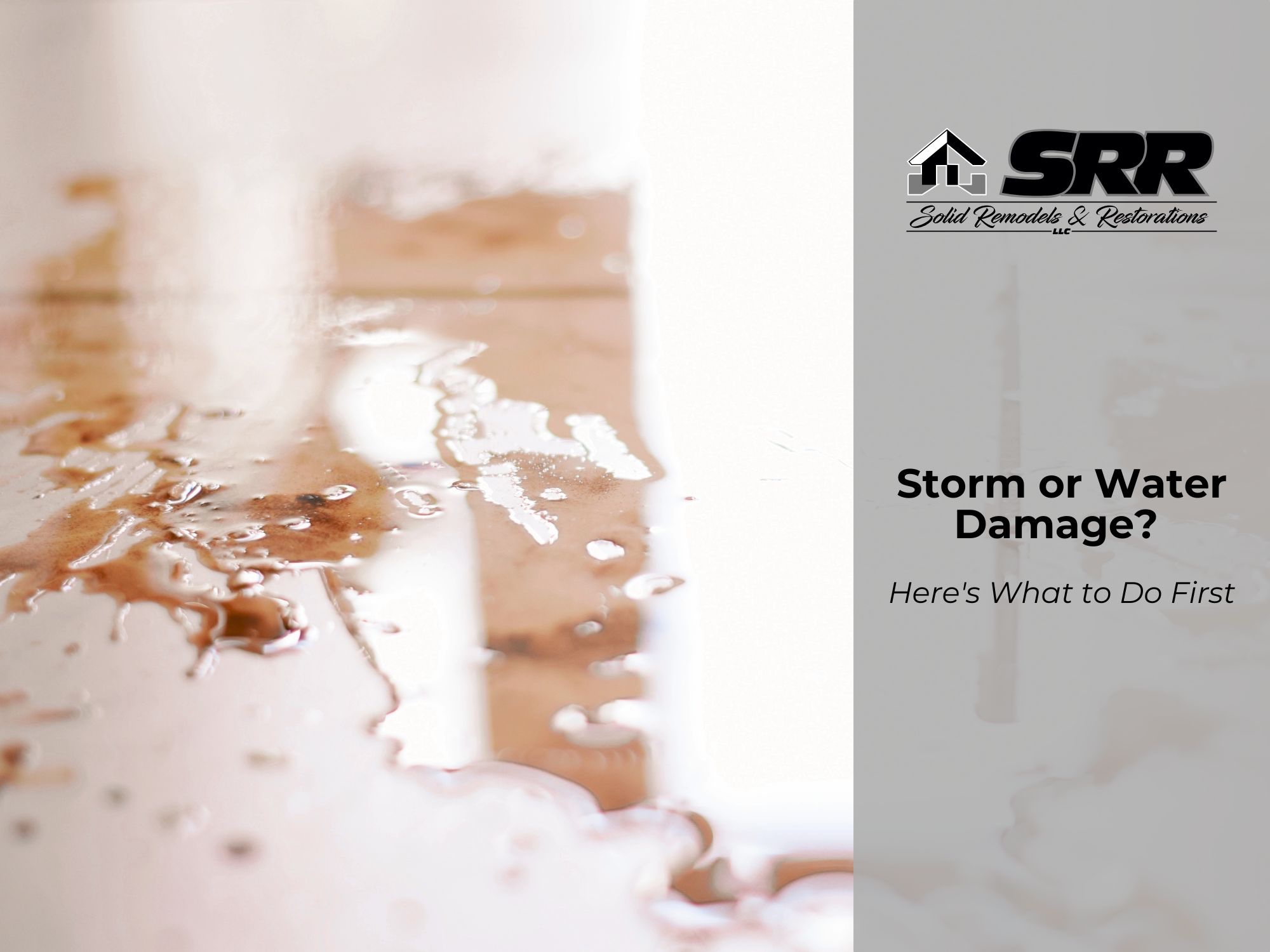
A burst pipe, a backed-up sewer line, a storm that pushed water under your door — however it happened, the first hour matters more than most homeowners realize. Water damage doesn't wait, and neither should you.
Here's exactly how to deal with water damage from the moment it happens to the day your home is fully restored.
Step 1: Make Safety Your First Move
Before anything else, cut power to the affected area if there's any chance water reached outlets, panels, or appliances. Standing water and live electricity are a deadly combination. If the damage involves sewage backup or outside floodwater, treat it as contaminated — keep people and pets out until a professional assesses it.
If it's safe, stop the source. Shut off the main water supply if a pipe is the problem. For storm damage, make temporary repairs to prevent more water from entering — tarp a damaged roof section, board a broken window. Keep every receipt for those emergency materials. Temporary repair costs are typically reimbursable through your insurance claim.
Step 2: Document Before You Touch Anything
Photograph and video everything before a single item is moved or dried. Capture the source of damage, every affected room, standing water levels, and damaged belongings. Label photos with dates and timestamps. This documentation is the foundation of a strong insurance claim — gaps in it can cost you.
Don't throw anything away until your adjuster has seen it.
Step 3: Call Your Insurance Company — Then Call a Contractor
Report the damage to your insurance carrier immediately. Most policies have strict reporting windows, sometimes as short as 24–72 hours after a storm event. Missing that window can jeopardize your entire claim.
Then contact a storm damage restoration contractor. Having a professional present during the adjuster's visit is one of the most overlooked steps homeowners skip — and one of the most valuable. A contractor spots damage an adjuster might miss and speaks the same technical language, which directly affects what your claim covers.
One critical distinction: standard homeowner's insurance covers sudden, accidental water damage — a burst pipe, an appliance failure, a storm breach through your roof. It does not cover flooding from outside your home unless you carry separate flood insurance.
Step 4: Understand What Water Damage Restoration Actually Means
What is water damage restoration, and what does water restoration mean in practice? It's far more than running a fan and calling it dry. Professional water damage restoration is a structured process: moisture mapping with thermal imaging to locate hidden water behind walls and under floors, industrial extraction of standing water, commercial-grade drying equipment, full sanitization to stop mold and bacteria, and structural repair and reconstruction wherever the damage reached.
Can water damage be fixed? Yes — but timing is everything. Mold begins developing within 24 to 48 hours of water exposure. The longer moisture sits, the deeper it migrates into framing, subfloor, and drywall, turning a contained repair into a major reconstruction job. Minor water damage can be resolved in 3–5 days. Significant storm damage or flooding with structural impact can take 2–4 weeks.
Step 5: Restore Completely — Not Just on the Surface
Knowing what to do after storm damage means more than patching what's visibly broken. True storm damage restoration brings your home back to its full condition — extraction, drying, mold remediation, drywall, flooring, and any structural reconstruction needed. Anything short of that leaves problems behind walls that surface later as bigger, more expensive issues.
Solid Remodels Is Ready When You Need It
Solid Remodels specializes in post-disaster restoration for homeowners across Joplin, Carthage, Neosho, and Pittsburg, KS — from emergency water damage repair through full storm damage restoration and reconstruction.
Call (417) 793-0621 or visit solidrr.com. Don't wait — every hour counts.